Planning your first surf trip to Morocco and wondering what equipment you really need? This guide explains every essential piece of surf gear so you feel confident before you even touch the water.
Why the Right Surf Equipment Matters
Using the correct beginner equipment makes a huge difference to how fast you progress and how safe you feel in the ocean. The right board, wetsuit and accessories help you paddle easier, catch more waves and avoid unnecessary injuries or frustration.
Choosing Your First Surfboard
For your first sessions, a big, stable board is your best friend. Beginners should usually start on a soft‑top “foamie” longboard or funboard because it offers lots of volume (float) and a wide surface that makes standing up much easier. Short performance boards are designed for advanced surfers and will only slow your learning when you are starting out.
Soft‑Top vs Hard Board
Soft‑top boards have a foam deck that feels softer if it hits you during a fall, which is great for first‑timers. Hard boards (fiberglass or epoxy) are less forgiving and more likely to cause dings or bruises when you are still learning how to control the board.
Understanding Volume, Length and Width
When you read about boards online, you will see numbers for length, width and thickness. For beginners, more volume (liter number) means more stability and easier paddling, so it is usually better to choose the larger option instead of going too small. A typical first board is around 8–9 feet long, nice and wide, and thick enough to float you comfortably.
Leash: Your Safety Line
The leash is the cord that attaches your back ankle to the surfboard and it is an essential safety item. It stops the board from being washed away and prevents it from becoming a hazard to other surfers around you. Make sure the leash is roughly the same length as your board and always check that it is securely attached before entering the water.
Wetsuit: Warmth and Protection
Even in sunny Morocco, the water can feel fresh depending on the season, wind and time of day. A properly fitted wetsuit keeps you warm, protects your skin from the sun and offers a bit of cushioning against bumps on the board. Thickness (for example 3/2 mm or 4/3 mm) should match the water temperature and local conditions.
Rash Guard and Surf Bikini/Boardshorts
A rash guard is a thin top that prevents chafing from the board and the wax, especially under the arms and on the chest. Many beginners also prefer secure surf swimwear (one‑piece suits, surf bikinis or boardshorts with drawstring) so they can focus on waves, not on adjusting clothes after every wipeout.
Fins: Steering Your Board
Fins underneath your board act like a rudder and help you steer, hold your line and stay stable on the wave. Most beginner boards come with a simple fin setup already installed, so you usually do not need to choose anything complicated in the beginning. Just make sure fins are firmly attached and never sit or fall directly on them to avoid injury.
Wax and Traction
Board wax creates grip so your feet do not slip off when you pop up and ride. Before your session, apply a thin, even layer of wax on the area where you will place your hands and feet, and refresh it when it starts to feel smooth or dirty. In some cases, boards also have a traction pad near the tail, which works together with the wax to give better control.
Sun Protection and Comfort
Long days in the Moroccan sun mean strong UV exposure, even when the sky is cloudy. High‑SPF, water‑resistant sunscreen, a surf hat or cap, and UV‑protection sunglasses on the beach all help protect your skin and eyes. A simple microfiber towel, fresh water to drink and a light hoodie or poncho for after your session will keep you comfortable between surfs.
Optional Extras: Board Bag and Ear Protection
If you travel with your board, a padded board bag protects it from dings in airports, cars and storage. Some surfers also use earplugs to reduce cold water and wind entering the ear canal, which can help prevent irritation over time in frequent surfers.
Do You Need to Buy or Can You Rent?
For a first surf holiday, renting is usually the smartest choice. Renting allows you to try different sizes and shapes until you and your instructor find what works best for your body, fitness level and the local waves. Once you feel more confident and know what you like, you can think about buying your own equipment.
Learn with Instructors at Sable Beach House
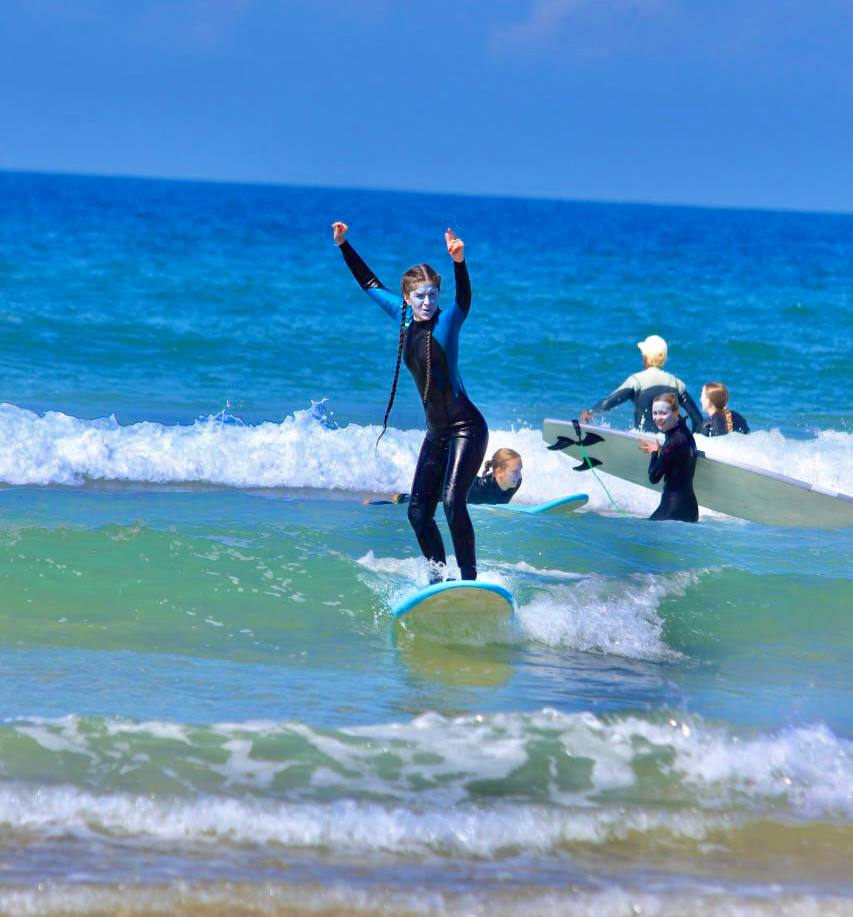
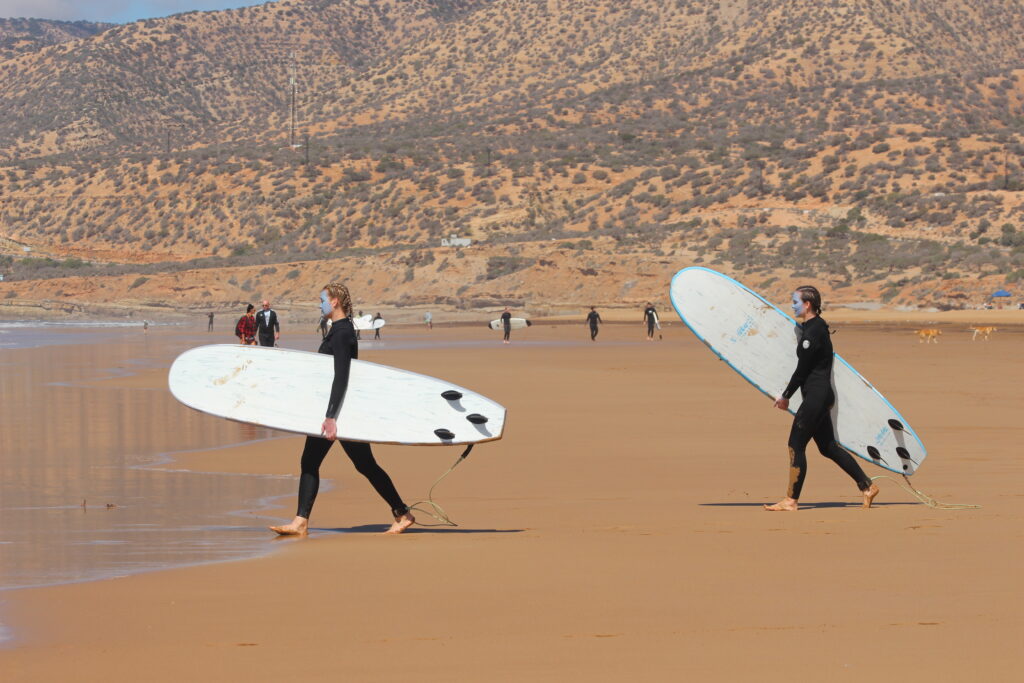
At Sable Beach House in Morocco, daily surf lessons include all the essential equipment you need: beginner‑friendly boards, leashes, wetsuits and transport to the best spot for the day. Certified instructors help you choose the right board for each session, explain how to set up and care for your gear, and guide you step by step from the sand to standing on your first waves.
Final Tips for Your First Surf Session
- Arrive a bit early to check your equipment and warm up on the beach.
- Listen carefully to the safety briefing about currents, flags and local rules.
- Start with small, gentle waves and focus on technique, not on looking “cool”.
- Respect other surfers, share waves and always keep control of your board.
With the right equipment, guidance and attitude, your first surf session at Sable Beach House can be the start of a lifelong love for the ocean.